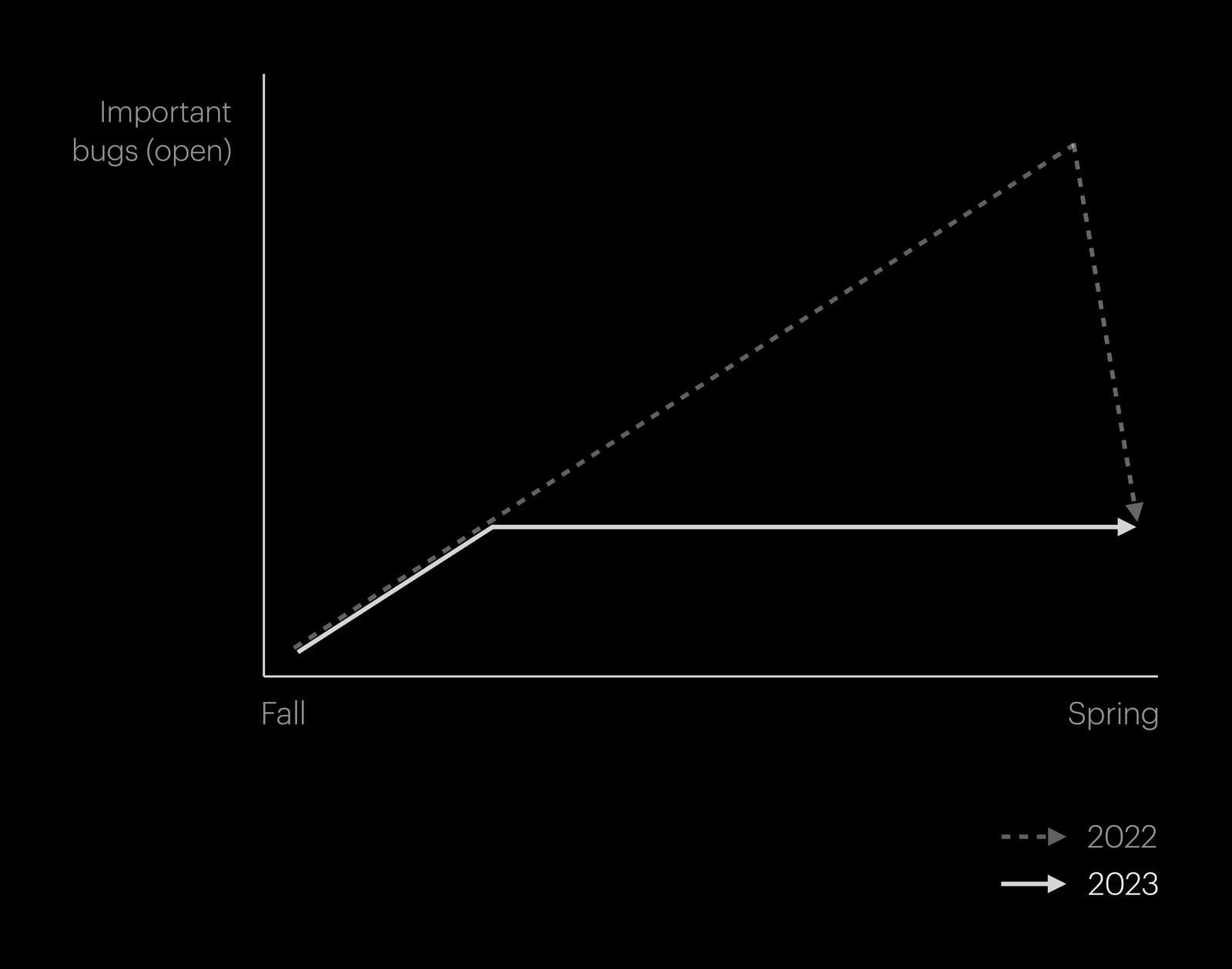
At Apple, AI/ML teams often weren’t working on the right bugs. The important ones got lost in a queue of thousands, so they piled up all release and then got crunched in a late scramble, with a few slipping into the build.
We could have just added this data to existing tooling that engineers already used, or sent each team a weekly digest, but the first would have buried the signal again and the second would have turned into one of the many emails people learned to ignore.
So with a designer and a UI engineer on my team, and my colleague and a data engineer on his team, we built a page that gave every team one score and a short, ordered list of what to fix next. It had to work for an engineer triaging in the morning and a manager going through it in a staff meeting, so we designed it to be readable above all else.
We incorporated a scoring system to encourage managers to improve their scores relative to their peers. The report became a standing agenda item in staff meetings throughout AI/ML, and by the end of that year’s release cycle, we had succeeded in flattening the spike of open bugs throughout the year while increasing the report’s MAUs from 800 to nearly 6,000 people.